

CMR-27 Saga - point 1.3: Additional spectrum for constellation gateway stations
Unprecedented growth in low-orbit constellations
Nearly 11,000 satellites are in operation today, which is almost four times more than ten years ago. Of these space stations, more than 90% are located in low Earth orbit, between 400 and 1,200 kilometers from Earth. This sharp increase in the number of satellites can be explained by the proliferation of low Earth orbit constellation projects:
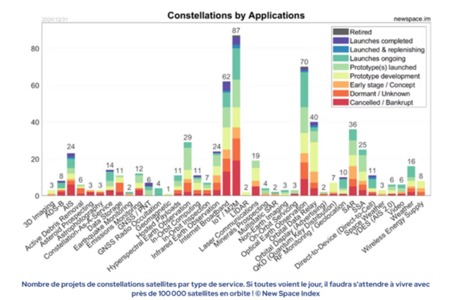
Ces constellations ont besoin de spectre supplémentaire pour fonctionner, notamment pour les stations passerelles qui assurent les transmissions entre les satellites et le réseau au sol.
These constellations require additional spectrum to operate, particularly for gateway stations that provide transmission between satellites and the ground network.
WRC-27 and the review of the 51.4–52.4 GHz band
The next World Radiocommunication Conference (WRC) will therefore examine, under item 1.3 of its agenda, the possibility for gateway stations to use the 51.4-52.4 GHz frequency band. The aim is to open up the Earth-to-space direction for them.
An existing regulatory framework limited to geostationary satellites
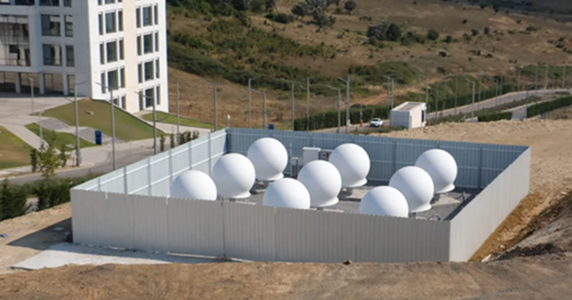
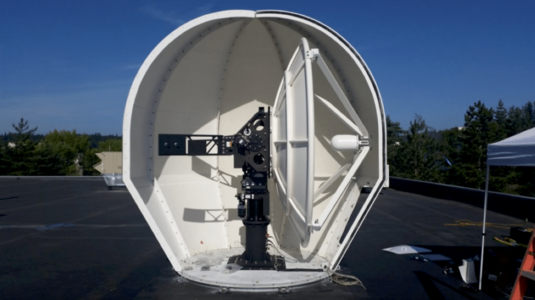
Since WRC-19, the 50.4-51.4 GHz frequency band can already be used by gateway stations in the Earth-to-space direction, but only for geostationary satellites. Gateway stations used by constellations are not yet defined in the ITU Radio Regulations (RR). As a result, reference 5.555C of the RR stipulates that, in this band, communications to space are only possible for stations with a diameter greater than 2.40 meters. This limitation to large antennas is important to avoid the deployment of a large number of stations, which would increase the level of interference to other services. However, gateway stations used to communicate with non-geostationary satellites can be much smaller (down to approximately 1 meter in diameter): reference 5.555C is not appropriate and other solutions must be considered.
Issues of compatibility and protection of other radio services
By extending these possibilities to earth stations using smaller antennas, particular attention will need to be paid to protecting authorized services in the 51.4-52.4 GHz band, such as the Fixed Service, and passive services in adjacent bands ( Earth observation satellite, radio astronomy). Indeed, the smaller the antenna diameter of the earth station, the more likely interference becomes.
It will also be necessary to protect geostationary satellites from emissions from gateway stations directed towards non-geostationary satellites. More appropriate protection needs to be sought, and Resolution 130 (WRC-23) provides the framework for work to be carried out on this agenda item, opening up the possibility of extending the framework already applicable in the bands just below (Resolutions 769 (WRC-19) and 770 (Rev. WRC-23)).